Skip to content

Happy Pride Month! How to get involved, get support or give support

Colorful rainbow gay pride flag being waved in the breeze by a hand wearing a sweatband

In recognition of the Stonewall Uprising in Manhattan, which – among other factors – prompted the Gay Liberation Movement, June is Pride Month.

Pride month celebrates the contributions of the LGBTQ+ community, honors those whose lives were lost to hate crimes and HIV/AIDS, and serves as a catalyst for equity advocacy.

This June, Seattle Pride celebrates the 51st anniversary of Pride festivities in Seattle, established in 1974 as a rallying cry for gay rights and queer visibility after the Stonewall uprising of 1969.

At the University of Washington, organized support and celebration of the LGBTQIA+ community goes back even further.

In 1967, UW Professor Nicholas Heer co-founded the Dorian Society, the first organization in Seattle to support gay rights and foster queer community. In 1969, Dorian House, operated by a UW counselor and staffed by UW students,  began providing counseling services to gay and lesbian folks (eventually becoming the Seattle Counseling Center).

And in the early 1970s, UW students organized the Gay Student Association and the more radical Gay Liberation Front.

More than half a century on, Seattle Pride Month is one of the city’s largest and most beloved annual events. Seattle Pride continues to connect the storied past and vibrant present.  Besides presenting the Pride Parade and Seattle Pride in the Park, Seattle Pride provides year-round community engagement activities designed to celebrate and uplift the voices in their community.

Here is a guide to some of the organizations representing, events celebrating and resources serving LGBTQIA+ communities at the UW and beyond.

Events

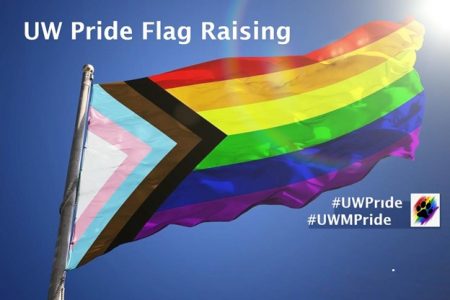
Pride Month Flag Raising

  • June 1/ UW Medicine
  • June 2/ 10:00 a.m./UW Campus

UW Medicine will be raising rainbow flags at all the medical centers on June 1. Flag raising locations at UW Medicine include Harborview Medical Center at Harborview Park, UW Medical Center Northwest Campus outside the Emergency Room by the campus bus stop, UW Medical Center at the flag pole at front entrance of hospital and Valley Medical Center at 3rd floor, main hospital building, by the fish tank next to the Infusion Center.

Please join us for the UW Campus raising of the Rainbow Pride Flag, at 10:00am on Monday, June 2. The flag will be raised at the flagpole on Memorial Way, near Kane Hall.

Pride Month kicked off early with Seattle Pride in the Park and Run & Walk with Pride. But there’s much more upcoming:

Lavender Graduation
June 10/ 5:30-7 p.m. / wǝɫǝbʔaltxʷ – Intellectual House

Celebrate the achievements and contributions of UW’s graduating lesbian, gay, bisexual, transgender, queer and questioning students.

Pride Month Lunch & Learn
June 17 / noon-1 p.m. / Zoom

Engage with the Ingersoll Gender Center, the TYP and others about their efforts to foster open, safe and inclusive spaces for all identities and orientations. Hosted by the UW Combined Fund Drive.

Trans Pride Seattle
June 27 / 5-10 p.m. / Volunteer Park

Stop by this annual event organized by Gender Justice League in collaboration with hundreds of local organizers, volunteers, and groups who support the Seattle-area TwoSpirit, Trans & Gender Diverse (2STGD) community.

PrideFest Capitol Hill
June 28 / noon-8 p.m. / Capitol Hill

Come for a massive block party featuring music, dancing, beer gardens, local businesses and family and youth programming. This celebration of the LGBTQIA+ community will span six blocks of Broadway and Cal Anderson Park.

Walk with UW in the Pride Parade
June 29 / 11:30 a.m. (meeting time) / downtown Seattle

Join the Q Center and Q Faculty and Staff Association or UW Medicine contingents to march in the annual Pride Parade, starting at 4th & Pike in downtown Seattle and ending at 2nd Ave. & Denny Way.

PrideFest Seattle Center
June 29 / noon-8 p.m. / Seattle Center

After the parade, take in day 2 of Seattle’s biggest celebration with four stages of food and drink, national and local acts, arts and crafts and family programming. All events are free and open to the public.

Tacoma Pride Festival
July 12 / noon-6 p.m. / Tacoma

The street festival will be an all ages event that will include a main stage with queer and BIPOC entertainment, a beer garden, Makers Market and so much more!

Find many more Pride Month community events at the Seattle Pride website.

Community

Q Faculty, Staff & Allies Association – fostering a campus climate where all queer faculty, staff and allies are valued and respected, regardless of sexual orientation or gender identity. Promotes education and dialogue, cultural diversity, leadership and advancement, recruiting and retention, social networking, exchange of ideas and provision of LGBTQIA+ resources.

UW Medicine LGBTQ+ – collection of resources, events and community building for queer members of the UW Medicine community.

Resources

LGBTQ+ Resources at the UW – supports a culture of inclusion and has provided protections from discrimination and harassment for individuals based on their sexual orientation long before such rights were recognized by federal or state law.

UW Aging with Pride study – landmark federally funded research project designed to better understand the aging, health, and well-being of sexual- and gender-diverse midlife and older adults. Karen Fredriksen-Goldsen, Ph.D., professor and director of Healthy Generations Hartford Center of Excellence at the University of Washington, initiated and has been leading the study since 2009.

UW Libraries – a wealth of LGBTQIA+ literature and resources, including the LGBTQ History Research Guide features several new additions including the Archives of Sexuality & Gender, LGBT Magazine Archive, Queer Pasts and much more. Queer Joy: is a curated list of graphic novels, novels, poetry, manga, movies and TV, including trigger warnings along with keywords and descriptions.

Special Collections houses oral histories from the Northwest Lesbian and Gay History Project and the LGBTQIA+ Archival Pride Resources.

The UW Tacoma Library has an excellent list of community resources, including this Gender and Sexuality subject guide.

Rainbow Book Month showcases LGBTQIA+ book awards and bibliographies from the American Library Association.

Support

Consider making a one-time contribution or setting up payroll deduction to UW Combined Fund Drive member organizations working to positively impact the lives and well-being of LGBTQ+ people:

Camp Ten Trees – providing residential summer camp sessions for LGBTQIA+ and allied youth and for children of LGBTQIA+ families — giving them a place to build skills, strengthen resiliency and make lifelong friends (charity code: 1468090).

Entre Hermanos – improving the health and well-being of the lesbian, gay, bisexual and transgender Latine communities in a safe and culturally appropriate environment (charity code: 0524060).

GLSEN: Gay Lesbian Straight Education Network – supporting the 8 of 10 LGBTQ+ students who are bullied or harassed by making schools safer for all, regardless of sexual orientation or gender identity (charity code: 1479258).

Human Rights Campaign – envisioning a world where every member of the LGBTQIA+ family has the freedom to live their truth without fear, and with equality under the law (charity code: 0315683).

Ingersoll Gender Center – strengthening the autonomy of the transgender and gender nonconforming communities through facilitated peer support groups, medical provider referrals and community advocacy (charity code: 0316214).

Lambert House – empowering lesbian, gay, bisexual, transgender and questioning youth through the development of leadership, social and life skills (charity code: 0320828).

Pride Foundation –  Pride Foundation inspires giving to expand opportunities and advance full equality for LGBTQ people across the Northwest. Since 1985, generous Pride Foundation donors have invested over 60 million in the LGBTQ movement in AK, ID, MT, OR, WA (charity code 0316716).

PFLAG – promoting the health and well being of lesbian, gay, bisexual and transgender people, their families and friends through support, education and advocacy (charity code: 0524061).

Seattle LGBTQ+ Center (formerly Gay City) – cultivates access and connections in our communities through advocacy, accessibility, intersectionality, sex and body positivity, stewardship and transparency (charity code: 0315949).

The Gay Lesbian Alliance Against Defamation (GLAAD) – GLAAD is dedicated to promoting and ensuring fair, accurate and inclusive representation of people and events in the media as a means of eliminating homophobia and discrimination based on gender identity and sexual orientation (charity code 0456944).

The Q Center – professionally supported resource, advocacy and mentoring center for queer students and concerns at UW, providing consulting to departments plus coordinates numerous programs, social organizations and educational initiatives for queer students (charity code: 0493258).

The Gay & Lesbian Alliance Against Defamation (GLAAD) – promoting and ensuring fair, accurate and inclusive representation of people and events in the media as a means of eliminating homophobia and discrimination based on gender identity and sexual orientation (charity code: 0456944).

The Trevor Project – providing life-saving, life-affirming programs and services to LGBTQIA+ youth to create safe, accepting and inclusive environments over the phone, online and through text (charity code: 1479131).


May is Older Americans Month

Promoting health in an aging population

Multi generational women having fun together at park - Multiracial people meet and hugging each other outdoor

Every year in May, Older Americans Month recognizes the contributions of older adults across the nation. Started by President Gerald Ford in 1976, the focus of this month is helping older population maintain involvement in community and social activities.  This engagement helps prevent abuse and neglect.

At the start of the millennium, 35 million Americans were aged 65 or older. By 2040, this number is expected to more than double to 80 million. Of those, 15 million will be 85 or older. Even among the very oldest–centenarians–the population rose by almost 50% from 2000 to 2014.

UW’s own Healthy Aging and Longevity Research (HALO) Institute is among those leading the charge in this field. Housed in the School of Medicine and founded by Dr. Matt Kaeberlein, its mission is “to enhance understanding of the biological mechanisms of aging in order to promote healthy longevity.”

Those last two words are crucial, recognizing the futility of increasing longevity without also addressing geriatric health. For this reason, Dr. Kaeberlein talks about “maximizing healthspan” instead of lifespan.

Related: Join us for a Lunch & Learn on Active Aging – Engagement and Resources

Maintain and improve health while aging

The National Institute on Aging, part of the National Institutes of Health, suggests the following steps to maintain quality of life and manage health:

  • Exercise – keeping moving can reduce the overall risk of death from all causes while maintaining muscle mass and helping to avoid obesity and type 2 diabetes.
  • Food and drink – small changes in eating habits can pay big health dividends. Multiple studies have determined the benefits of Mediterranean-style diets and moderating alcohol consumption, but even something as simple as eating green leafy vegetables has been shown to slow cognitive decline.
  • Sleepcontrary to common wisdom, older and younger adults both need the same amount of sleep, but seniors often struggle to achieve that due to pain or illness. Again, studies have linked chronic sleep deprivation with a host of health impacts, including an increased risk of dementia.
  • Mental health loneliness and isolation are linked to higher risks of heart disease, depression, and, yes, cognitive decline, whereas remaining socially active can be protective against those. The type of activity is less important than act of just doing it, so this leaves many opportunities, including hobbies, clubs, faith-based or community organizations, sports, the arts, and education. As a good example of the latter, the UW Access program allows Washington State residents who are 60 or older to audit up to two UW classes per quarter for a nominal fee.
  • Seeing a doctorregular check-ups can help catch illnesses early and identify and address risk factors for chronic conditions.

Ways to support seniors’ independence

Preventing social isolation is vital to older adults’ mental and physical well-being, and central to most senior centers’ mission of holistic wellness. Researchers have long known about the health benefits of “social capital”—the ties that build trust, connection, and participation.

These ties are especially important for older adults, because health and existing social capital generally declines with age. Volunteering is a fabulous way that seniors can maintain social capital while supporting a favorite cause or organization. Many seniors are involved in advocacy work through their senior center, as well.

For some seniors, engaging with technology can be intimidating. If you have a loved one who is uncertain about technology, help them out! There are many free programs available at senior centers intended to demystify technology.

Get a move on!

Staying active is a significant factor in maintaining independence for older adults. Exercise has been shown to prevent disease, reduce the risk of falls, improve cognitive function, and support positive well-being in seniors, according to a CDC report. Family and community members can take steps to support seniors in this endeavor by providing encouragement, education, and companionship – for example, during walks together.

Everything is better with a friend!

Senior centers are a great place to get active and make new friends! In addition to many of the typical offerings, such as Tai Chi, yoga, aerobics and Zumba, many centers now partner with programs like Silver Sneakers and Active Older Adults (AOA) that are scientifically proven to make older adults healthier.

Finally, call and visit as often as you can. If they no longer drive, make sure to offer transportation for needed trips and activities. Many senior centers offer transportation to and from the center, medical appointments, grocery stores, and other necessary trips for free or for a small fee.

Aging is an experience that everyone shares, albeit not in the same way. Genetics play a key role, as do socioeconomic, racial and gender factors. However, the relatively simple recommendations above have been proven to increase wellbeing, improve health, and mitigate risk factors for chronic conditions. And for those reading for whom old age seems far away, these lifestyle changes improve health outcomes at any age.

Other Ways to Help

Senior centers and organizations rely on donor support to keep their programs running. Consider volunteering at or setting up payroll deduction through the UWCFD for one of our member organizations to support healthy aging:

  • University of Washington Retirement Association (UWRA) (charity code 1481553) (part of the UW Foundation): The UWRA informs, connects and advocates for UW retirees and pre-retirees. The UWRA encourages continued engagement with the UW and fosters a purposeful retirement through educational and social programs.
  • Crista Senior Community (charity code 0316401): Providing retirement living in Shoreline and Silverdale, in a continuum of care with dignity and purpose for over 750 senior residents and their families.
  • Generations Aging with Pride (charity code 1482583): empowers older LGBTQ adults to live with pride and dignity by promoting, connecting, and developing innovative programs/services that enhance belonging and support, eliminate discrimination, and honor older LGBTQ adults.
  • Homage Senior Services (charity code 0337214): Largest provider of critical services for seniors and people with disabilities in Snohomish County. Through 28 programs in food and nutrition, health and wellness, social services, home repair, and transportation, 28,000 people are served annually.
  • Meals on Wheels People (charity code 1480747) has a mission to enrich the lives of older adults and assist them in maintaining independence by providing nutritious food, human connections, and social support. They also use their expertise and capacity to serve other nutritionally at-risk populations.
  • Pike Market Senior Center & Food Bank (charity code 0316442): At Pike Market Senior Center, we offer nutritious meals, individual social work case management, and healthful activities to over 1,500 older adults 55. Our Food Bank offers free weekly groceries to individuals of all ages that are facing hunger.
  • Senior Services of Island County (charity code 0316431): Programs serve elderly, disabled and low-income citizens. Services include congregate and home-delivered meals, transportation, housing, adult daycare, information and assistance, employment and senior activities.
  • Sno-Valley Senior Center(charity code 1482914): has been serving the Sno-Valley area and its families since 1975. The senior center inspires, supports, and empowers older adults to lead healthy, enriched lives.
  • Sound Generations (charity code 0316444): Promotes the emotional, social and physical well-being of seniors, their families and caregivers by providing information and services such as Meals on Wheels, Senior Centers, home repair, transportation, community dining, and healthy aging.
  • Wallingford Community Senior Center (charity code 0316445): WCSC fosters healthy, secure, positive aging, while building community across generations. Varied programs promote healthy active living, social connection transition support, technology access and literacy, lifelong learning, and civic involvement.


Listening, Learning, Including: Shifting the Autism Dialogue

April is Autism Acceptance Month, an opportunity to deepen our understanding of this complex developmental disability. 
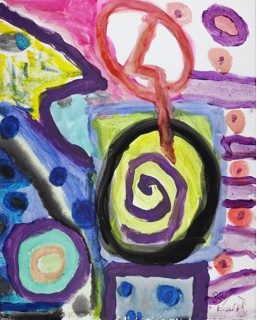

According to The Autism Society of America, Autism Spectrum Disorder (ASD, or just Autism, capitalized) is a complex, lifelong developmental condition that typically appears during early childhood and can impact a person’s social skills, ability to communicate, ability to form and maintain relationships and behavioral self-regulation. 

The Autism experience is different for everyone. Often referred to as a “spectrum condition” that affects people to varying degrees, it is frequently characterized by challenges with repetitive behaviors and non-verbal or limited communication. 

Across all racial, ethnic, and socioeconomic groups about 1 in 36 U.S. children have been identified with Autism, with boys nearly four times as likely as girls to be identified, according to the CDC. There is no known single cause of Autism, but many factors are thought to contribute to its development, including environmental, genetics, preexisting conditions and abnormalities in brain structure. 

Early diagnosis helps a person receive resources that can support the choices and opportunities needed to live fully. 

Autism in adults can be challenging to diagnosis, and late-identified adults might find that a diagnosis offers little in terms of day-to-day support or benefit – in addition to being expensive. On the other hand, a formal diagnosis offers validation that a real, identifiable reason for certain differences exists, offering psychological clarity, relief and perhaps greater self-acceptance. 

Ever wonder if you or a loved one could be autistic? Check out this UW Autism Center webinar Could I Be Autistic? A Free Webinar for the Self-Diagnosed or Wondering on April 25 at 6 p.m. 

Over the last two decades, extensive research has explored the connection between childhood vaccinations and autism. The results of this research are clear: vaccines do not cause Autism. 

The 2021 shift from Autism Awareness Month to Autism Acceptance Month reframes the conversation to focus on intentional inclusion. The change represents a long-held belief by Autism and neurodiversity advocates that helping Autistic people lead more fulfilling lives, rather than treating the condition like an illness, is the appropriate approach. 

“Awareness is knowing that somebody has Autism,” said Christopher Banks, CEO of The Autism Society of America. “Acceptance is when you include a person with autism in your activities.” 

Learn more and get involved 

Parents and caregivers can use the CDC’s Learn the Signs, Act Early program to monitor children’s development and know when there might be a concern; the brief checklist of milestones provides a child development baseline. 

The Autistic Self Advocacy Network (ASAN) seeks to advance the principles of the disability rights movement with regard to Autism. ASAN believes that the goal of Autism advocacy should be a world in which autistic people enjoy equal access, rights, and opportunities. 

UW’s Do-IT (charity code: 1481184) (Disabilities, Opportunities, Internetworking, and Technology) Center is dedicated to empowering people with disabilities through technology and education. It promotes awareness and accessibility—in both the classroom and the workplace—to maximize the potential of individuals with disabilities and make our communities more vibrant, diverse, and inclusive. 

Check out Art Enables, an art gallery and vocational arts program dedicated to creating opportunities for artists with various disabilities to make, market, and earn income from their original and compelling artwork. Resident artists receive 70% of all art sales. Purchase artwork by resident artists. 

In The world needs all kinds of minds, Temple Grandin, diagnosed with Autism as a child, talks about how her mind works — sharing her ability to “think in pictures,” which helps her solve problems that neurotypical brains might miss. She makes the case that the world needs people on the Autism spectrum: visual thinkers, pattern thinkers, verbal thinkers, and all kinds of smart geeky kids. 

Read Your “Autism Awareness Day” Might Be Excluding Autistic People (Harvard Business Review) to better understand how organizations can meaningfully uplift the voices of Autistic people in discussions and celebrations of neurodiversity. 

Watch The Exclusion & Dehumanization of Autistic & Neurodivergent People, written and produced by the Neurodivergent Rebel Lyric Rivera, a trans-nonbinary Autistic self-advocate. 

Listen to the absdkids podcast for more on autism news, current events, and inclusion. Each week a new guest shares their unique perspective and expertise as it relates to the fascinating world of autism. 

Search the hashtags #ActuallyAutisic and #CelebrateDifferences on social media for a look at a social movement giving Autistic people back their power; check out the UW Autism Center’s Autism Stories, a series of podcast conversations about life with Autism based on the belief that everyone has a story to share; and carve out some time for the excellent playlist The Autism Spectrum from TED Talks. 

Support 

Consider making a one-time contribution or setting up payroll deduction to one of our CFD member organizations working to create a more inclusive life for people with Autism: 

University of Washington Autism Center (charity code 1481191): This fund supports activities at the UW Autism Center. The Center provides professional training, diagnostic evaluation and program consultation for children with Autism and related pervasive developmental disorders. 

Autism Society of America (charity code 0315891): A national source of information, advocacy and support that reaches local communities with a one-of-a-kind nationwide network of Autism knowledge and support. 

Autism Speaks (charity code: 1482721): creating an inclusive world for all individuals with autism through advocacy, services, supports, research and innovation, and advances in care for autistic individuals and their families. 

The Autism Community in Action (charity code: 1478769): They share the most recent scientific discoveries with parents so they can help their children. Using both targeted therapies and proven medical interventions, kids diagnosed with autism have the potential to live a healthy, independent, and joy-filled life. 

The Arc of King County (charity code 0315598): The Arc of King County promotes and protects the rights of people with intellectual and developmental disabilities so they can live, learn, work and play in the community – improving the quality of life for us all. 

Disability Rights Washington (charity code 1481504): Our mission is to advance the dignity, equality, and self-determination of people with disabilities. We pursue justice on matters related to human and legal rights. 

Autism Empowerment (charity code 1480886) is devoted to promoting a culture of acceptance, enrichment, inspiration and empowerment for youth and adults on the Autism spectrum, and their families. Autism is OUR journey. We’ll meet you along the way. 

Kindering (charity code 0315445): Kindering embraces children of diverse abilities and their families by providing the finest education and therapies to nurture hope, courage, and the skills to soar. 

Wonderland Kids (charity code 1478424): is a nonprofit agency serving children with developmental delays, disabilities, and prenatal substance exposure. Founded in 1969, Wonderland is dedicated to helping children meet healthy developmental milestones. 

Events

Sibling Support Program: A Family-Centered Mental Health Initiative,
5:30 PM, every Thursday, April 3 – December 18, 2025
Online event

Taking care of each other: creating systems of care
12:00 PM – 4:30 PM, April 30, 2025
Seattle Convention Center

Earth Day 2025: Our Power, Our Planet

Earth Day is an annual global event on April 22 to demonstrate support for environmental protection.  

This year’s Earth Day theme is Our Power, Our Planet, inviting people around the world to unite behind renewable energy and increase the global generation of clean electricity by 2030. Individuals are encouraged to learn more about and advocate for clean energy, mobilize to create positive pressure to act and share your action plan on social media.  

 At a rally, a cleanup, with your vote, or your wallet, be heard in the way that is most meaningful for you.  

First held in 1970, Earth Day now includes a wide range of events coordinated globally by Earthday.org, involving over a billion people from more than 193 countries – making it the largest civic observance in the world. 

Join us for a Lunch & Learn that highlights the work of organizations working to support our planet.

In December 1970, Congress authorized the creation of a new federal agency to tackle environmental issues, the U.S. Environmental Protection Agency, whose mission is to protect human health and the environment – today and every day.  

Soon after, several important pieces of environmental legislation were passed, among them the Clean Air Act, Clean Water Act, and Endangered Species Act. Prior to these legislative acts, there were no legal or regulatory mechanisms to protect our environment.  

Earth Day is our annual reminder to take care of our planet and protect our environment today and for future generations.  

Sierra Club has some creative suggestions for how to engage: 10 Ways to Celebrate Earth Month

Earth Month Events 

1st Thursday Free Arboretum Walking Tours –  Thursday, April 3, 11:30 a.m.
Graham Visitors Center, Washington Park Arboretum
2300 Arboretum Drive East, Seattle, 98122 

More: Check out the UW Sustainability Events Calendar. Learn more about sustainability efforts taking place all year. 

Earth Month Clean Up at Magnuson Park – Saturday, April 26, 10:00 a.m. – 12:00 p.m.

Share your love for Mother Earth and join Puget Soundkeeper for an Earth Month Cleanup on Lake Washington! Friends, family, and furry friends are all welcome; for anyone with accessibility needs, there are benches along the cleanup route, and the path is paved and level. Public bathrooms can be found adjacent to the parking lot, and parking is plenty!

Forterra Fridays at the Duwamish Hill Preserve – Friday, April 18, 1 p.m. – 4 p.m.

We’re excited to invite you to volunteer with us for a special Earth Month event at Duwamish Hill Preserve, a Tukwila park providing critical wildlife habitat and public trails in the middle of an industrial area. Join us on Friday, April 18th, from 1:00PM to 4:00 PM, to restore essential wildlife habitat by removing Himalayan blackberry that threatens our local native trees shrubs and groundcover. Established native plants benefit local wildlife, improve water quality, and enhance air quality. You will also gain valuable insights into ecological restoration and our innovative approach to land conservation. We’ll start with a walk of the site and Earth Day themed trivia and have restoration professionals on hand to answer questions about plants, restoration, the Green Tukwila Partnership and Forterra.

Farm Steward Volunteer Work Party – Saturday, April 26, 9:30 a.m. – 12:30 p.m.

Spend your Earth Day with us at 21 Acres! Each year, Earth Day volunteers at 21 Acres help build healthy soil, support local food systems, and take vital action for the climate. Join your neighbors in Washington and around the world in giving back to the Earth while connecting with people who share your passion. Work alongside our knowledgeable staff on a variety of seasonal restoration and farm projects. Learn how regenerative farming and strong local food systems are climate solutions. Stick around after the volunteer event for a farm tour and shop at our local foods Farm Market.

Learn More:

Take Action 

  • 52 Ways to Restore Our Earth: For us, every day is Earth Day. If you feel the same, here are 52 actions and tips to make a difference, every day of the year. 
  • Greener Living: EPA has tools to help you learn and understand the issues and help you reduce your environmental footprint. 
  • Reduce, reduce and recycle properly: Check out UW Facilities disposal guide. 

Support 

Consider making a one-time contribution or setting up payroll deduction to one of our CFD member organizations working on environmental conservation and sustainability education. Below are a few of the many you can support. 

Carbon Washington Foundation (charity code 1482524): Focused on accelerating the transition to a vibrant clean-energy economy. Advocates for carbon reduction policies.   

Join Conservation Northwest in connecting habitat, protecting wildlands, and restoring wildlife (charity code 0320835). 

EarthShare (charity code 0316709): EarthShare brings together individuals, workplaces, and communities to protect our planet’s health. We are a network of local and national nonprofits working to improve and preserve the environment here at home and around the world. 

Environmental Coalition of South Seattle (1479396) – ECOSS is a non-profit organization working with Puget Sound neighborhoods towards building an environmentally responsible community. We serve as a voice for the community on issues that encourage a clean environment and urban redevelopment.  

Friends Of The Earth (charity code 0314972): Promotes clean and sustainable energy, clean transportation, climate justice for poor and vulnerable populations, responsible use of technology and protection of the earth.  

Greenpeace (charity code 0314978): Greenpeace’s mission is to expose global environmental problems, and promote solutions for future generations. 

Long Live the Kings (charity code 1482467) – Our mission is to restore wild salmon and steelhead and support sustainable fishing in the Pacific Northwest. We envision a Northwest with a growing human population, a thriving economy, and strong and vibrant salmon runs. 

Outdoors For All (charity code 0320849) enriches the lives of individuals with disabilities and families and helps them to get out and enjoy the great outdoors.  

Puget Soundkeeper Alliance (charity code 0315023): Protects and enhances the waters of Puget Sound through on-the-water volunteer patrols, shoreline cleanups, and enforcement of the Clean Water Act. 

Zero Waste Washington (charity code 0315047) drives policy change for a healthy and waste-free world. We envision a just, equitable, and sustainable future where we all produce, consume, and reuse responsibly. 


This Women’s History Month – Moving Forward Together

This year’s theme focuses on women educating and inspiring generations. Meant to highlight and support women, this year focuses on women who have dedicated their lives to “education, mentorship, leadership to shape them minds and futures of all generations.”

Teaching is a role that has been considered “women’s work”, but it serves a powerful role in shaping the lens through which we see the world. A good teacher engages and inspires a student long after a student has left the classroom. Here at the UW, there are many stellar examples of women in that role like UW President Ana Mari Cauce.

The roots of Women’s* History Month as a national commemoration run all the way back to March 8, 1857, when women from various New York City factories staged a protest over poor working conditions. The first Women’s Day celebration in the United States was in 1909, also in NYC. In 1911, March 8 was designated International Women’s Day.

In 1980, President Jimmy Carter issued the first presidential proclamation declaring Women’s History Week to align with the longstanding International Women’s Day. The next year, congress designated the second week of every March as National Women’s History Week.

In 1987, after being petitioned by the National Women’s History Project, congress authorized the president to designate each March as Women’s History Month, a celebration of the contributions and achievements of women to the social, political, economic and cultural course of American history.

From Abigail Adams’ influencing to Sacagawea’s guiding to Sojourner Truth’s orating to Harriet Tubman’s emancipating to Clara Barton’s caring to Elizabeth Cady Stanton’s and Susan B. Anthony’s organizing to Amelia Earhart’s daring to Margaret Sanger’s innovating to Eleanor Roosevelt’s activating to Jeannette Rankin’s glass-ceiling-shattering to Georgia O’Keeffe’s creating to Sister Rosetta Tharpe’s inventing to Grace Hopper’s computing to Dolores Huerta’s protecting to Rachel Carson’s eye-opening to Rosa Parks’ resisting to Lucille Ball’s entertaining to Maya Angelou’s writing to Gloria Steinem’s advocating to Shirley Chisolm’s trailblazing to Katherine Graham’s commanding to Barbara Walters’ reporting to Vera Wang’s couture-designing to Oprah Winfrey’s culture-defining to Ruth Bader Ginsburg’s judging—and many, many more.

The course of American history has been written and revised by courageous, visionary, persistent women.

But while applauding the achievements and progress animated by both famous and everyday champions of equity, Women’s History Month also reminds us that gender bias still exists, women remain underrepresented in nearly all arenas of power and influence, and women’s rights are human rights that need to be constantly fought for at home and around the world.

Moreover, women’s empowerment in achieving health equity for themselves, while a fundamental right and an ongoing movement, still lags behind men.

Learn

There are many resources available to help raise awareness about the work of achieving gender parity and inclusiveness; here are just a few to check out:

Engage

Women Supporting Women: A Pop-Up Event
Friday, March 7, 10:00 AM – 8:00 PM, at University Village
Features a curated line-up of female-owned, businesses popping up at participating University Village stores.

2025 Town Hall Gala $
Saturday, March 8, 6:00 PM – 9:00 PM, at The Great Hall
Celebrates the extraordinary contributions of women shaping Seattle — and beyond!

International Women’s Day Speed Mentoring
Saturday, March 8, 10:00 AM – 1:00 PM, at Expedia Group Campus
This event is designed to connect early-career women with accomplished professionals across industries.

Women in Tech Seattle 2025
Thursday, March 27, 6:00 PM – 9:00 PM, at Tapster
Seattle’s premier tech networking event! A great opportunity to make big business connections from BigTech to Startups.

Northwest Women’s Show $
March 23-24, Tacoma Dome, Tacoma
Two days of fashion, health, food, entertainment and fun in this two-day celebration of women.

Film screening and panel discussion: Catching sight of Thelma and Louise $
Saturday, April 5, 2:30 PM – 6:30 PM, at Rainier Arts Center
A powerful documentary that revisits the groundbreaking 1991 film to explore its influence on female empowerment, resistance, and social justice.

Support

If Women’s History Month and International Women’s Day inspire you to support positive change for women and girls, you can make a one-time donation or set up payroll deduction to a UW Combined Fund Drive organization working toward a gender-equal world. Find dozens in the UWCFD’s searchable database. Here are just a few:

Dress For Success Worldwide – promoting the economic independence of women through professional attire, career development and employee retention programs (charity code 0456936).

Freedom Education Project Puget Sound – providing a rigorous college program to incarcerated women in Washington and creating pathways to higher education after prison (charity code 1482384).

Girl Scouts of Western Washington – developing leadership, courage, confidence and character for girls age 5-17 (charity code 0315196).

IGNITE Worldwide – dismantling myths and stereotypes girls have about technology careers by connecting them with women technology professionals (charity code 1481065).

International Center for Research on Women – empowering women, advancing gender equality and fighting poverty through research, capacity building and advocacy (charity code 1481537).

Justice for Girls Coalition of Washington State – building public will and community investment in innovation policies and practices that impact girls in Washington state (charity code 1482829).

League of Women Voters of Washington – strengthening the public’s understanding of public policy issues through nonpartisan educational projects that help people become informed, active participants in their communities (charity code 1480788).

Mary’s Place Seattle – empowering unhoused women, children and families to reclaim their lives by providing shelter, nourishment, resources, healing and hope in a safe community (charity code 1481713).

UW Alene Moris Women’s Center – building a culture of social justice, equity and non-violence through educational programs, advising, counseling, life skills training, and public policy (charity code 0315815).

The UW Combined Fund Drive stands with, supports and celebrates all women. We envision a world where women are healthy, safe, heard and empowered.

*In this article, “women” and “girls” refers to all gender expansive people: cisgender, trans, non-binary, gender non-conforming, gender queer and anyone woman- or girl-identified. Learn more about these terms here

March is developmental disabilities awareness month

Developmental Disabilities Awareness Month is recognized annually in March, through presidential proclamation, as an opportunity to celebrate the inclusion of people with disabilities in civic and social life to create strong and diverse communities.

The month also provides the catalyst to raise awareness about the many barriers that people with disabilities still face in achieving both self-determination and full societal inclusion.

Read about the history of developmental disabilities awareness month

The awareness campaign theme for 2025, developed by the National Association of Councils on Developmental Disabilities, is “Were Here All Year.” The theme is intended to “emphasize that community, accessibility, and opportunities for people with developmental disabilities should be recognized and championed every day—not just in March”  people with developmental disabilities in society.

What are developmental disabilities?

Easterseals, the national nonprofit leader in empowering people with developmental disabilities to be full and equal participants in society, defines developmental disabilities as disabilities that occur from birth to the first few years of development, may impact day-to-day functioning, and are typically lifelong diagnoses.

Common developmental disabilities include autism spectrum disorder, cerebral palsy, down syndrome, hearing or vision loss, learning disorders and ADHD.

Developmental disabilities are understood to be caused by a complex interaction of factors including genetics, parental health and behaviors during pregnancy, or by complications during birth, among other possible factors. The specific cause is often unknown.

The prevalence of developmental disabilities is more common than people realize. According to the Centers for Disease Control and Prevention, 17% of children in the United States between the ages of three and 17 have one or more developmental disabilities or delays.

More than five million Americans reportedly have developmental disabilities.

Living with developmental disabilities can create a variety of challenges, such as difficulties with mobility, communication, self-help, independent living and physical and mental health issues. Moreover, people with developmental disabilities are vulnerable to abuse and neglect on many levels, including physical, psychological, legal, and systemic abuse.

Learn more and get involved

UW’s Do-IT (Disabilities, Opportunities, Internetworking, and Technology) Center is dedicated to empowering people with disabilities through technology and education. It promotes awareness and accessibility—in both the classroom and the workplace—to maximize the potential of individuals with disabilities and make our communities more vibrant, diverse, and inclusive.

Parents and caregivers can use the CDC’s Learn the Signs, Act Early program to monitor children’s development and know when there might be a concern; the brief checklist of milestones provides a child development baseline.

Check out Art Enables, an art gallery and vocational arts program dedicated to creating opportunities for artists with disabilities to make, market, and earn income from their original and compelling artwork. Resident artists receive 70% of all art sales. Purchase artwork by resident artists.

Temple Grandin: The world needs all kinds of minds: Temple Grandin, diagnosed with autism as a child, talks about how her mind works — sharing her ability to “think in pictures,” which helps her solve problems that neurotypical brains might miss. She makes the case that the world needs people on the autism spectrum: visual thinkers, pattern thinkers, verbal thinkers, and all kinds of smart geeky kids.

Check out Easterseals’ Resource Library: Easterseals employs an inclusive cast and crew led by people with disabilities highlighting how Easterseals is expanding local access to healthcare, education, and employment for people with disabilities, families, and communities across the country.

Support

Consider making a one-time contribution or setting up payroll deduction to one of our CFD member organizations working to create a better and more inclusive life for people living with a developmental disability:

The Arc of King County (charity code 0315598): The Arc of King County promotes and protects the rights of people with intellectual and developmental disabilities so they can live, learn, work and play in the community – improving the quality of life for us all.

Easter Seals Washington (charity code 1481729 – designate them through CHC) Changing the way the world defines and views disabilities by making profound, positive differences in people’s lives every day.

Disability Rights Washington (charity code 1481504): Our mission is to advance the dignity, equality, and self-determination of people with disabilities. We pursue justice on matters related to human and legal rights.

Seattle Children’s Hospital and Research Center Foundation (charity code 0496965 ): Our dedicated researchers are working relentlessly to improve treatments for more than 200 diseases and conditions to discover the most effective, least invasive and best options for the kids who need it most.

Summit Assistance Dogs (charity code 0315210) creates life-changing partnerships by providing highly skilled mobility service dogs for people living with disabilities in the Pacific Northwest.

Kindering (charity code 0315445): Kindering embraces children of diverse abilities and their families by providing the finest education and therapies to nurture hope, courage, and the skills to soar.

Atlas Assistance Dogs (charity code 1482419) Atlas provides support to assist people with disabilities in training their own service dog. We also provide online courses to train and certify experienced dog trainers to be service dog trainers.

Wonderland Child Family Services (charity code 1478424): is a nonprofit agency serving children with developmental delays, disabilities, and prenatal substance exposure. Founded in 1969, Wonderland is dedicated to helping children meet healthy developmental milestones.

Dogs for Better Lives (charity code 1478994) Professionally train dogs to help people and enhance lives while maintaining a lifelong commitment to all dogs rescued or bred and the people served. Our three assistance dog programs are: Hearing, Autism, and Program Assistance.

Join us for the UWCFD’s Third Annual Blanket Making on Feb. 13

Join the UWCFD and the Whole U and volunteer for our Third Annual Blanket Making on Feb. 13 at noon.

This hybrid event is one of our favorites.

  • It’s easy. You only need to know how to use scissors and tie a knot. No craft experience necessary.
  • It’s fun. Get a blanket making kit and invite a friend to join you. Book a conference room and invite the whole team!
  • It makes a difference. These blankets give animals in a shelter that is theirs. It starts in their cubby, stays with them in the shelter and goes with them to their fur-ever home.

This year, we’ll be supporting animals at PAWS. In addition to providing shelter for homeless dogs and cats, PAWS also provides relief for animals from disaster zones (often beyond the state) and rehabilitation for sick, injured or orphaned area wildlife.

We’ll have a short blanket how-to demonstration, a presentation from PAWS and then time for a Q&A. UWCFD staff will be available online to help with our blanket questions.

Sign up today to get a blanket making kit (you can also make a donation here. We have 180 kits available this year and they are first some, first served.

Stash with 2024 volunteer made blanket

Here are the answers to our FAQs.

  1. Can I get my own fleece to make my own blanket? Absolutely. Make more than one if you want!
  2. Can I make more than one blanket? Yes.
  3. Is it ok if I sew the blanket instead? Of course!
  4. This is so much fun. Can you help us put a volunteer project together for our department? Yes. Contact Jolyn Mason for more information.

PAWS accepts pet blankets year-round, and it’s a fun and easy craft project to do with friends or by yourself. No experience? No problem. Here’s how to make a no-sew fleece blanket. Or watch this video, produced by Seattle Humane (charity code: 0314982).