Last updated: July 27, 2026
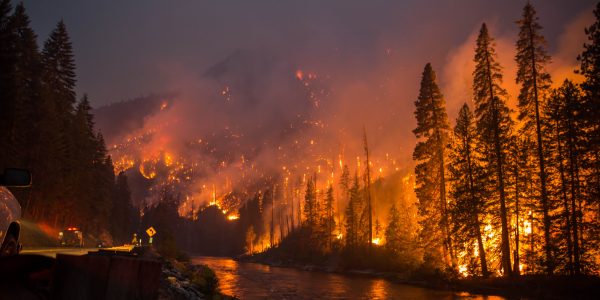
Wildfire season in the western U.S. has grown longer, more unpredictable and more devastating for people and wildlife in recent years. Smoky skies and poor air quality are increasingly the norm across the region and 2026 is already shaping up to be one of the more challenging years on record.
Widespread drought has fueled an early and intense start to the season. The Washington Department of Ecology declared a statewide drought emergency for the fourth year in a row – snowpack is sitting at just 50% of normal and rainfall has been below average. Unlike some recent seasons, where dry conditions were partially offset by healthy snowpack, Western Washington has been abnormally dry from the start. Above-average fire risk is predicted across the Pacific Northwest due to warm, dry conditions and high fuel loads. The first notable fire of the season, the 125-acre Libby Creek Fire, began in early May.
Climate change is amplifying all of these risk factors, and experts warn that fire season, which runs roughly from May through November, is only getting longer. These are real indicators that we may be in for another difficult, damaging and potentially deadly season.
Learn more about UW partnerships to foster disaster-resilient communities.
Understanding the health risks
Wildfire smoke is a serious concern, though it helps to understand exactly what we’re dealing with. According to Savannah D’Evelyn, a postdoctoral fellow with the UW Department of Environmental and Occupational Health Sciences, wildfire smoke doesn’t cause new diseases to develop. However, particulate matter in the air can worsen existing conditions like asthma and cardiovascular disease for some people. Learn more from UW experts on wildfires and smoke impacts.
How fires start
Natural fires, often sparked by lightning, play a role in ecological balance but can grow out of control quickly. Nearly nine out of ten wildfires nationwide are human-caused, whether from discarded cigarettes, campfires that weren’t fully extinguished, vehicle sparks or fireworks. The good news is that means most wildfires can be prevented.
How to stay safe this fire season
Being prepared is the best thing you can do for yourself and your family. Here are some important steps to take:
- Stay informed. Keep an eye on fire danger forecasts using tools from the National Weather Service and US Geological Survey.
- Clear your property. Remove debris, flammable materials like firewood and dead vegetation from around your home.
- Protect your air. Keep windows closed, use air filtration systems and limit time outdoors during smoky conditions. The Washington State Department of Health Smoke from Fires website has helpful guidance.
- Make an emergency plan. Know your evacuation route, locate nearby shelters, gather important documents and keep emergency supplies on hand. Even in Western Washington, having a plan can save lives.
- Recreate responsibly. Whether you’re camping or enjoying a backyard fire, always make sure flames and heat sources are fully extinguished before you leave.
- Use available resources. The Washington Department of Natural Resources offers tips on campfire safety and home landscaping in dry conditions. Wildfire Ready Neighbors provides risk assessments and in-home consultations to help create a wildfire protection plan tailored to your property, budget and lifestyle. And Ready.gov has a helpful guide to preparing for wildfires.
Support the people doing this work
Fire season is also a reminder of the incredible dedication of firefighters and environmental protection organizations across our region. Through the UW Combined Fund Drive, you can make a one-time gift or set up a monthly payroll deduction to support nonprofits working to reduce wildfire risk and make outdoor recreation equitable and accessible for everyone.
Search for a charity by name or cause to get started. If you don’t see the organization you’re looking for, reach out at uwcfd@uw.edu and we’ll work to get it added.
Your gift makes a difference.